
Factual Witness Statements and Expert Evidence: Lessons from Ebanks-Blake v Calder
25th March 2026
AI and Expert Reports: What the Civil Justice Council’s Consultation Means for Medico-Legal Practitioners
8th May 2026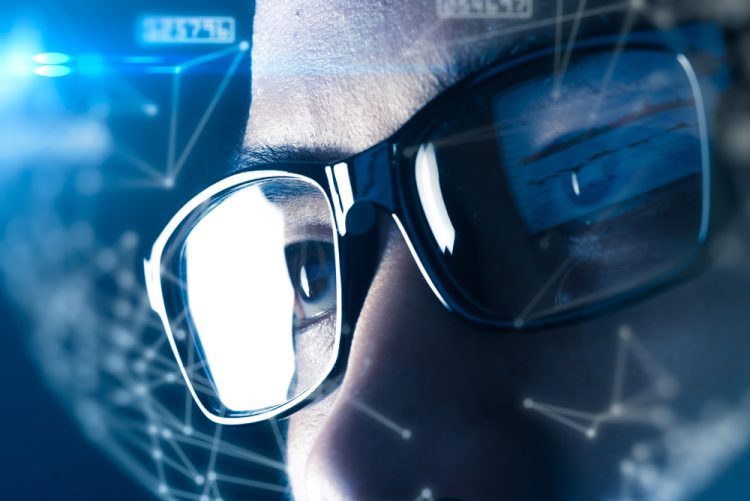
The Case
A High Court judgment handed down in March 2026 has attracted significant attention. Not for its underlying commercial dispute but for what happened in the witness box on the first day of a nine-day trial.
The case centred on the ownership and control of a property development company. The claimants alleged that the third defendant had wrongfully altered Companies House records and that key documents were falsified. However it is the conduct of the second claimant Laimonas Jakstys that makes this case essential reading for anyone involved in litigation.
What Happened in the Witness Box
Mr Jakstys entered the witness box on the afternoon of 19 January 2026 and gave evidence through an interpreter. Counsel for the defendants noticed that he was pausing noticeably before answering questions even straightforward ones put through the interpreter. After several such exchanges counsel told the judge she could hear interference coming from around Mr Jakstys. This was a noise also heard by the interpreter.
Mr Jakstys was asked to remove his glasses. Shortly afterwards his mobile phone began broadcasting a voice aloud. Checks on his device confirmed that he had been receiving coaching through smart glasses linked to his phone while under cross-examination.
The technology involved was unremarkable in consumer terms. Smart glasses that can relay audio from a paired phone are widely available. What was remarkable was that they were worn into court.
The Explanation and Why It Failed
Mr Jakstys denied using the glasses to receive coaching. He claimed that the contact he had called several times during the day listed in his phone as “abra kadabra” was simply his taxi driver. He also suggested that the voice broadcast from his phone may have been caused by ChatGPT.
ICC Judge Agnello KC was unconvinced. She found his explanations to be without credibility. The judge concluded that a call had been made connected to the smart glasses and had continued during the witness’s evidence until his phone was removed from him.
The taxi driver explanation did not assist matters. The judge noted that the timing and frequency of the calls and the circumstances in which they were made were inconsistent with any innocent purpose.
The Consequences for the Witness Evidence
The consequences went well beyond the smart glasses incident itself.
The judge also found that Mr Jakstys’s witness statements were “full of arguments, opinions and submissions” that were not his own and that he had no personal knowledge of many of the issues discussed. When answering questions he was hesitant, sought to stick to a script and gave answers that did not correspond with his written evidence. His assertion that he could not read English was contradicted by documentary evidence.
The result was total and his evidence was rejected in its entirety. The defendants succeeded and obtained an indemnity costs order against the claimants.
The Wider Legal Principles
This case raises issues that will resonate in any litigation context including personal injury, clinical negligence and professional discipline proceedings.
First the integrity of witness evidence is not merely a procedural nicety. It is fundamental to the fact-finding function of the court. Receiving real-time assistance during cross-examination is a serious interference with the administration of justice. While the judge made no contempt finding, commentators have noted that the court has jurisdiction to take action in respect of conduct that interferes with the proper administration of justice.
Second ,the damage caused by this conduct extended far beyond the specific answers given while the glasses were in use. The judge treated the coaching as part of a broader pattern of dishonesty that infected the entirety of the witness’s evidence. In medico-legal proceedings where a claimant’s credibility is often central the implications are obvious.
Third, PD57AC imposes strict requirements in the Business and Property Courts to ensure that witness statements reflect the personal knowledge and recollection of the witness. Practitioners must ensure that witnesses understand these obligations. Courts in other divisions will take a similar approach in substance even where PD57AC does not formally apply.
Practical Implications
This case is a warning to legal representatives on both sides of the courtroom.
For those instructing witnesses the obligation to prepare them properly has never been more important. The boundaries of permissible preparation have never been more clearly delineated. A witness who arrives in the box unable to answer questions without external assistance has not been properly prepared. They have been set up to fail and potentially to commit contempt.
For those cross-examining this case illustrates the importance of remaining alert to the unusual. Pausing, hesitation and answers that do not quite fit the questions can all be symptoms of something more than nerves. Consumer wearables are now small, stylish and indistinguishable from ordinary eyewear.
Courts and tribunal panels should consider whether standard directions need to be updated to address the use of electronic devices and wearable technology. This is particularly relevant in remote or hybrid hearings where supervision of the witness environment is more limited. As technology become smore sophisticated. the principles at stake will not change.